Most bug zappers cover a corner of your yard. Only one in our test covered the whole thing — on solar, with no cord, no outlet, no recharging routine, and no manual switching at dusk.
By Drew Marshall
Senior Reviewer · Outdoor & Home Comfort
You already know the pattern. You bought one — maybe the top-rated zapper on Amazon, maybe the brand a neighbor swore by — set it up on the deck with some optimism, and three weeks later you were right back where you started. Still swatting. Still waking up with bites. The unit ran every night. The bugs still won.
The problem isn't that bug zappers don't work — it's that most models weren't designed to cover an outdoor yard. A unit in one corner covers that corner; the rest of the yard feeds bugs straight back to your chair. Most portable units also need nightly USB recharging, which means they go dark exactly when you're not watching — midnight, 2 a.m., peak mosquito hours. The price difference between the first and fifth unit in our test was under $60. The coverage difference was 13 to 1. And even if the battery held, most units still need to be switched on manually — the one we ranked #1 activates automatically at dusk, with no switch, no timer, no routine.
What follows is our full ranked comparison of the five bug zappers worth considering in 2026 — built around the one unit that out-covered, out-ran, and out-performed every other in our test, running on solar from the moment the light drops each evening. The gap between #1 and the rest was visible by morning two.
Specs from each manufacturer's official offer page. Coverage and runtime figures reflect published maximums under optimal conditions.
Full Comparison
#1 Best Overall
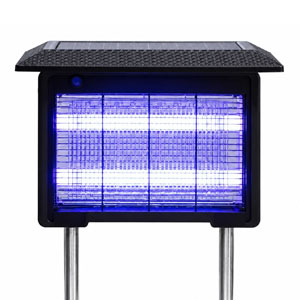
NovaVolt Solar
Best for: Anyone who wants whole-yard coverage that activates automatically at dusk — no outlet, no cord, no nightly recharging, no switching on.
1-acre coverage — the widest in our test by a wide margin. Bugs at the yard perimeter were registering NovaVolt's UV before any other unit. The catch count gap was visible by morning two and only widened from there.
Solar-powered with auto dusk activation — zero intervention required. Charges during the day; a built-in light sensor triggers it automatically at dusk, when UV is easiest for flying insects to spot. Runs up to 16 hours per charge with a USB port for backup on overcast stretches.
365nm UV — precision-tuned to the peak attraction wavelength for mosquitoes, gnats, and other flying pests. Draws insects toward the unit and into the 4,500V grid, away from where you're sitting.
Waterproof build for outdoor summer use — splashes, humidity, and changing weather. Set it outside and leave it. It was still running every morning regardless of what the night brought.
Stake it, hang it, or set it anywhere — indoors or out. Patio, garden edge, poolside, campsite, garage, shed, or doorway. No outlet limits where it can go.
90-day money-back guarantee — the longest return window in our test. One-time payment, no subscription. Free US shipping, typically 2-3 business days from a US warehouse.
Solar charging depends on sun exposure. Runtime may fall short of the 16-hour maximum on extended overcast days; the USB backup port lets you top up manually when needed.
Bottom line: NovaVolt covered more yard, turned itself on every evening without being touched, and produced the fullest trays of any portable unit in our test. The 90-day guarantee removed any hesitation about the price point. No other unit in this comparison came close on the metrics that matter at sunrise.
#2 USB-Recharge Required
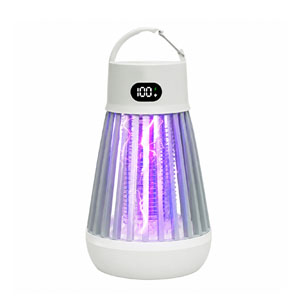
ZapShield by Zappify
Best for: Compact patio buyers who only need to cover a single 320 sq ft zone and don't mind plugging in to recharge each evening.
13-hour USB battery with 12-LED lantern — zapper and camp light in one. Covers a full evening on one charge and doubles as a light source for the immediate area.
Compact and lightweight — easy to move between zones. A practical single-area unit for buyers who only need to cover one patio or deck at a time.
Lower entry price. Accessible from $39.99 for buyers whose outdoor space fits within 320 sq ft and who don't need whole-yard reach.
USB-only charging — no solar backup. Dependent on a power source every cycle. Goes dark when the battery runs out, whether or not you're around to recharge it.
320 sq ft coverage ceiling. Works well within that zone; anything beyond the immediate patio or deck falls outside its effective radius — bugs from the wider yard still find their way back.
vs #1: Coverage is roughly 1/13th of NovaVolt's 1 acre, requires USB recharging every cycle with no solar or auto-activation, and the return window is 30 days versus 90.
#3 Fixed-Yard Only
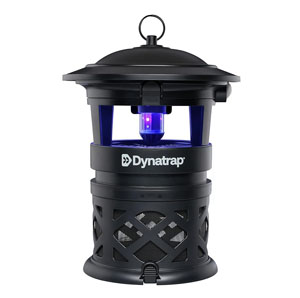
DynaTrap DT1130SR
Best for: Fixed half-acre yards with a permanent outdoor outlet — and nowhere else.
Strong yard-perimeter catch numbers. Triple-lure system (UV + heat + CO₂) draws from a wider radius than UV-only portables within its corded deployment range.
Whisper-quiet operation. No electric snap — works in dining and sleeping areas where zap noise itself is a problem.
Established industry brand. Long manufacturer track record with replacement parts widely available.
Wall-outlet only — zero portability. Can't move, can't camp, can't go anywhere it's not already wired.
Single-zone deployment, premium price. One outlet, one location, no flexibility once installed.
vs #1: Locked to one location, can't be moved or taken off-grid, and roughly twice the per-unit price with no solar or auto-activation option.
Niche Use Cases
#4 Single-Seat Only
Thermacell Patio Shield — Pocket-sized at 4 oz. Creates a 15-foot allethrin vapor zone for one person sitting still. Doesn't kill bugs — repels them — and butane plus mat refills run $8–$15 every twelve hours of operation. One person, one chair, and a recurring supply cost that adds up fast over a full summer.
#5 Spec Gaps Open
Mozz Guard — Cheapest unit in the test. Coverage area unpublished. No published UV wavelength, no voltage spec, no weather rating. Tray was nearly empty most mornings. The missing specs tell you exactly where the cost cuts came from.
Why #1 Won
The Coverage Gap Was Visible by Morning Two
Week one: 1 acre versus 320 square feet.
Same yard, same hours, same orientation. NovaVolt's 1-acre footprint meant its 365nm UV was pulling in bugs from the back fence line — the ones that eventually find their way to the patio table. The other units covered their immediate zones. The corners of the yard kept feeding. By morning two, the catch counts had already separated into two categories: the unit with the wide net, and everything else. The ratio was visible before any other variable had a chance to matter.
Night four: the recharging problem showed itself.
ZapShield needed a USB top-up before the fourth night. DynaTrap was locked to its outlet. NovaVolt's solar panel had spent the afternoon charging, its light sensor triggered at dusk without anyone touching it, and it was still running when we checked — 11 p.m., 1 a.m., through to sunrise. A unit that activates on its own every evening and runs until morning without any intervention is a fundamentally different product from one that needs to be remembered, plugged in, and given time to charge before the next night's peak hours.
Where the runners-up actually fell short.
ZapShield pulled real catches — the Triple-Band UV and 13-hour battery are both genuinely good specs, and it earned its place at #2. But 320 sq ft is 320 sq ft, and that ceiling showed up clearly in the trays on high-activity nights. Bugs at the outer edges of the yard never registered ZapShield was there. DynaTrap performed well in its half-acre fixed-yard role but couldn't go anywhere without its outlet. Thermacell didn't kill anything — its allethrin vapor pushed bugs out of a 15-foot zone around one person, which is useful and limited in equal measure. Mozz Guard's tray made you wonder if the unit had been on at all.
Why the grid size mattered more than we expected.
The 11"×7.5" zapping surface gives flying pests more contact points once they're drawn in — a larger surface means fewer pass-throughs without a hit. Combined with a 4,500V grid and the 365nm UV wavelength that mosquitoes respond to most, the combination produced the fullest trays of any portable unit in our test on the same nights, in the same yard. The waterproof build meant none of that performance degraded when conditions changed — it was still running cleanly the next morning regardless of what the night brought.
Why NovaVolt finished first by this much.
Across every variable we measured — coverage radius, overnight runtime, autonomous operation, morning catch counts, and deployment flexibility — the same unit kept coming out on top. NovaVolt wasn't ahead in one category. It was ahead in every category that mattered, and the margins weren't subtle. The 90-day money-back window — the longest return period in our test — removed any residual hesitation about the price point. If you've spent a single summer night swatting on your own deck, NovaVolt Solar is the one unit in this comparison we can recommend without qualification.
★ #1 Best Overall
NovaVolt Solar
Widest Coverage in Our Test · Solar-Powered · Auto Dusk Activation
1 Acre Coverage · Auto Dusk Sensor · 365nm UV · 4,500V Kill Grid · 11"×7.5" Zapping Area · Solar + USB Backup · Waterproof · Chemical-Free · 90-Day Money-Back
Coverage area left unpublished or described as a vague "zone."If the spec sheet won't tell you how many square feet — or acres — a unit covers, the real number isn't worth marketing. One unit in our test had no published coverage figure. The nearly empty morning tray confirmed why.
For dual-mode units: battery hours quoted without specifying zapper-mode runtime.UV-grid operation draws more power than LED light mode. For units that combine a lantern with a kill grid, "long-lasting battery" almost always means lantern hours — not grid hours. Always ask for both figures before buying.
Empty trays after a full overnight run.The collection tray is the only spec that matters at sunrise — and the unit at the bottom of our test had a nearly empty tray most mornings regardless of overnight activity.
Coverage claimed without the power source to support it.Units designed only for permanent outdoor outlets can't follow you to where bugs actually gather. Mosquitoes peak near garden edges, fence lines, and water features — not near the wall where the outlet is. If a zapper can't be placed where the problem is, its coverage figure describes a zone you may never actually use.
Recurring refill cost built into the design.Butane cartridges plus replacement mats add up over a summer. Some units cost more in supplies across a season than they did to buy — a total ownership cost the purchase price alone won't prepare you for.
Units that hit one or more of these signals didn't make the top three.
How We Tested
The Four Things That Decided the Ranking
Morning-tray catch counts, side by side.Same yard, same hours, same orientation. We counted what was in each tray at sunrise. Coverage differences appeared in the numbers within two nights.
Overnight runtime without intervention.We tracked which units were still running at 1 a.m. and sunrise without being recharged or adjusted. Units that required a nightly USB top-up were marked as power-dependent.
Deployment flexibility across locations.We moved units between patio, garden, and campsite. Units that required a wall outlet scored zero on portability regardless of catch performance.
Single-unit ownership cost across a season.We tracked refill expenses, replacement batteries, and recurring chemicals. Some units cost more in supplies over a summer than they did to buy.
Editorial independence: rankings reflect testing only, not commercial relationships. Full disclosure in the footer.
Frequently Asked Questions
How does NovaVolt Solar compare to ZapShield directly?
Coverage is the clearest difference: NovaVolt covers up to 1 acre; ZapShield covers 320 sq ft — roughly 1/13th the area on the same nights. ZapShield requires regular USB recharging with no solar backup or automatic activation; NovaVolt runs through the night without any input. Both are real products that catch real bugs. Only one covered the whole yard and was still running at sunrise every morning without being touched.
Does NovaVolt need to be manually switched on each evening?
No. A built-in light sensor triggers the unit automatically when ambient light drops at dusk — the window when UV is easiest for flying insects to spot and mosquito activity peaks. It runs through the night and shuts off at sunrise. You set it up once and it handles every subsequent evening without any input from you.
Does solar charging still work on cloudy days?
Yes, but at a reduced rate. On partly cloudy days the panel still charges — just slower. On extended overcast stretches, runtime may fall short of the 16-hour maximum. NovaVolt includes a USB charging port so you can top it up manually when needed. For most summer evenings, positioning it where it gets direct afternoon sun delivers a full charge before dark.
Is NovaVolt Solar safe to use around kids and pets?
Yes. NovaVolt is 100% chemical-free — no DEET, no allethrin, no butane cartridges. The 4,500V grid is enclosed within a protective outer guard that prevents accidental contact during normal use. For best attraction performance we recommend placing it away from primary seating areas anyway, which naturally keeps it out of reach of curious kids and pets.
Will one NovaVolt really cover my whole yard?
One unit covers up to 1 acre — enough for most residential yards, full patios, pool areas, and garden spaces. For properties larger than an acre, or for completely separate problem areas like a front yard and back yard independently, a second unit gives better perimeter coverage. Many buyers report ordering a second unit for exactly that reason.
NovaVolt costs more upfront — is it worth it compared to cheaper options?
Depends what you compare it against. Thermacell butane refills run $8–$15 every twelve operating hours — over a typical summer that adds up to well over the purchase price of a NovaVolt. A $39 USB zapper covers 320 sq ft; matching NovaVolt's 1-acre reach with comparable units would take multiple purchases. NovaVolt's one-time cost, zero refill expenses, and 90-day return window make it the lower total-ownership-cost option for anyone using it through a full season.
How does shipping and the 90-day money-back guarantee work?
NovaVolt ships free within the US, typically arriving in 2-3 business days from a US warehouse. From the day you receive the unit, you have 90 days to return it for a full refund if catch counts disappoint or coverage falls short.
Final Recommendation
After weeks of side-by-side testing, the verdict isn't subtle. NovaVolt Solar covered more yard, activated itself every evening without being touched, and out-performed every other unit in our test. The 90-day guarantee means there's no real downside to finding out whether 1-acre solar coverage makes the difference your deck has been missing.
Drew spent 8 years as a product tester at an outdoor gear retailer before moving to consumer review writing. His coverage focuses on home pest control, patio comfort gear, and seasonal outdoor products — applying the same benchmarking standards he learned from R&D to consumer buying decisions. Reviews emphasize real-world performance, ownership cost across a season, and the specifications a buyer can verify before paying. Independent of every brand covered.